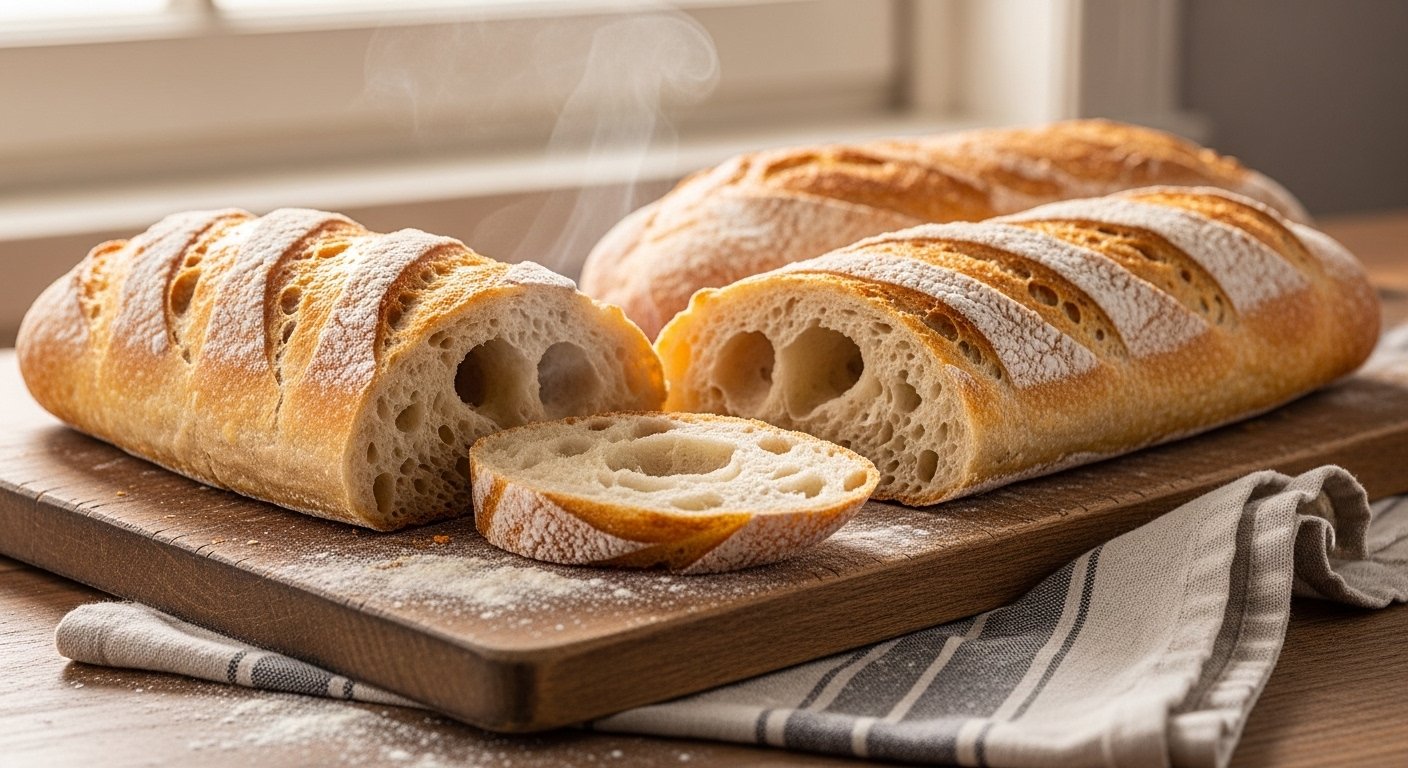
Have you ever wanted to make fresh bread at home that looks and tastes like it came from a real bakery? A sourdough baguette recipe is a wonderful way to start. These long, thin loaves have a crispy golden crust on the outside and a soft, airy inside. Because they use a natural sourdough starter, the bread has a gentle tangy flavor that makes every bite special.
Many people think making baguettes is too hard, but this easy sourdough baguette recipe changes that. You can finish the whole process in one day if your starter is active and bubbly. No need to wait overnight. This means you can enjoy warm artisan sourdough baguette recipe bread with dinner the same evening. Families love it because the smell fills the kitchen and everyone feels happy when they break off a piece. Over time, you will get better and better, and your bread will taste even more like the French sourdough baguette recipe from traditional bakeries.
Why Choose a Sourdough Baguette Recipe with Starter?
Sourdough starter is like a living friend in your kitchen. It is a mix of flour and water that catches wild yeast and good bacteria from the air. When you add it to your dough, it helps the bread rise slowly and naturally. This slow rise gives the bread better flavor and makes it easier for some people to digest.
In addition, a same day sourdough baguette recipe saves time compared to breads that need a long cold rest in the fridge. You mix, let the dough rest, shape, and bake all in a few hours. Another thing is that this method works well for beginners. You do not need fancy machines. A simple bowl and your hands are enough. That’s why so many home bakers try a sourdough baguette recipe for beginners first.
King Arthur flour is popular for bread because it has good strength, but you can use any all-purpose or bread flour you have at home. The important part is to choose flour that feels fresh. For a soft sourdough baguette recipe, some bakers mix in a little whole wheat, but we will keep this one simple at first.
What You Need for This Easy Sourdough Baguette Recipe
Gather these simple ingredients for about three or four medium baguettes. This amount makes enough for a family meal plus leftovers for the next day.
- 400 grams of bread flour or all-purpose flour (about 3 and a half cups)
- 280 grams of warm water (around 80 to 85 degrees F, like a nice warm bath)
- 80 grams of active sourdough starter (it should be bubbly and smell a little sweet and tangy)
- 8 grams of salt (about one and a half teaspoons)
That’s all you need for the basic dough. Because the recipe is simple, each part shows clearly. If you want a mini sourdough baguette recipe, just divide the dough into smaller pieces later. For a whole wheat sourdough baguette recipe, you can swap 100 grams of the white flour with whole wheat flour. This adds a nutty taste and makes the bread a little heartier.
Gluten free sourdough baguette recipe needs different flours like rice or sorghum plus binders, so it is a separate path. We will talk more about that later. For now, this recipe focuses on classic wheat flour for the best artisan results.
Step 1: Prepare Your Sourdough Starter
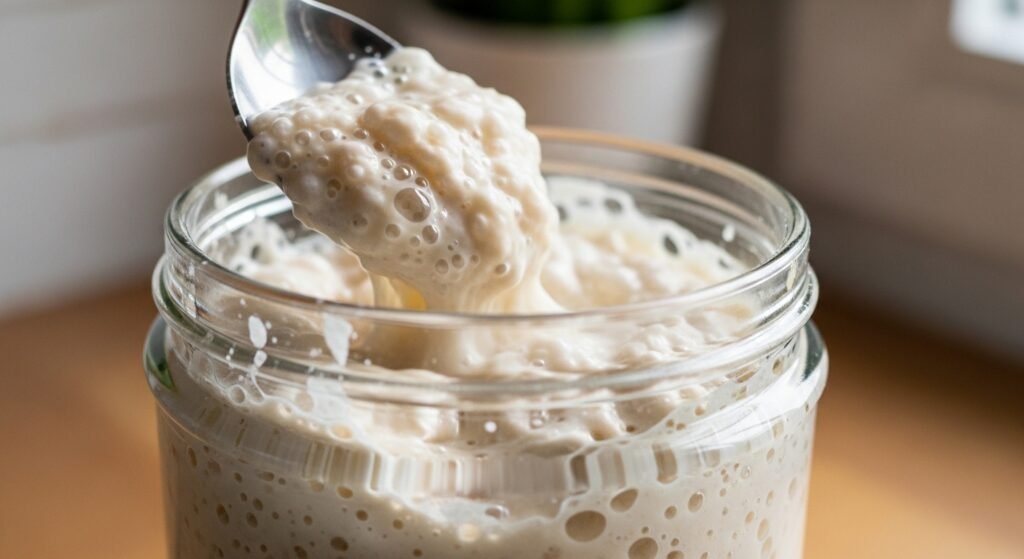
First, make sure your starter is ready. Feed it the night before or in the morning if you bake in the afternoon. Mix equal parts flour and water with a spoonful of old starter. Let it sit in a warm spot until it doubles and has lots of bubbles. This usually takes four to six hours.
An active starter is the secret to good rise in any sourdough baguette recipe with starter. If your starter is weak, the baguettes will stay flat. That’s why checking the bubbles helps you feel confident before you begin.
Step 2: Mix the Dough for Your Best Sourdough Baguette Recipe
In a large bowl, add the warm water and your bubbly starter. Stir them together gently until they look mixed. Next, add the flour and salt. Use a spoon or your hand to bring everything together into a shaggy dough. It will feel sticky, and that is normal.
Do not knead hard like you might for other breads. This easy sourdough baguette recipe uses a no-knead style with stretch and folds instead. After mixing, cover the bowl with a clean towel or plate. Let it rest for thirty minutes. This rest, called autolyse, helps the flour soak up water and makes the dough smoother later.
After that, wet your hands with a little water. Reach under the dough, pull up one side, and fold it over the top. Turn the bowl and do this four or five times. This builds strength without tiring your arms. Cover again and let it rest for another thirty minutes. Repeat the stretch and folds two more times, one hour apart.
Over time, you will notice the dough becomes smoother and a little bouncy. This means the gluten is developing nicely. For a simple sourdough baguette recipe, these gentle moves are enough. After the last fold, let the dough rise on the counter for two to three hours total until it grows about 50 percent bigger. In a warm kitchen, it rises faster. In a cooler one, give it extra time.
Step 3: Divide and Shape the Baguettes
When the dough looks puffy and lively, turn it out onto a lightly floured counter. Be gentle so you do not lose the air bubbles. Divide it into three or four equal pieces. Each piece will become one baguette.
For each piece, gently pat it into a small rectangle. Fold the long sides toward the middle like folding a letter. Then roll it carefully into a long log shape about 12 to 14 inches long. Try to make the ends a little pointed like real French baguettes. If you want mini versions, make them shorter.
Place the shaped loaves on a floured cloth or baking sheet with space between them. Cover lightly and let them proof for one to one and a half hours. They should look a little bigger and feel soft when you touch them gently. This final rest is important because it helps the baguettes rise tall in the oven.
Many beginners worry about shaping. Remember, even if your first loaves look a little uneven, they will still taste wonderful. Practice makes the shapes better each time you bake.
Step 4: Bake Your Artisan Sourdough Baguette Recipe
Preheat your oven to 475 degrees F with a baking stone or heavy baking sheet inside. Also put a shallow pan on the bottom rack for steam. Steam is the magic that gives the crust its beautiful crackle.
When the oven is very hot, carefully move your baguettes onto the hot stone using a peel or floured board. Use a sharp knife or razor to make three or four diagonal slashes on top of each loaf. These cuts let the bread expand nicely in the oven.
Pour a cup of hot water into the bottom pan to create lots of steam right away. Close the oven door quickly. Bake for the first 10 minutes with steam. Then lower the temperature to 450 degrees F and bake another 15 to 20 minutes until the baguettes are deep golden brown.
The crust should sound hollow when you tap it. Take them out and let them cool on a wire rack for at least 30 minutes. Waiting is hard because the smell is so good, but cutting too soon makes the inside gummy.
For softer crust in a soft sourdough baguette recipe, you can brush the hot loaves lightly with water or wrap them in a cloth while they cool a bit. Most people love the crisp version though.
Tips to Make Your Sourdough Baguette Recipe Even Better
Keep your kitchen around 75 to 80 degrees F for steady rising. If it is colder, the process takes longer, but the flavor can become deeper. Watch the dough, not the clock.
If your dough feels too sticky during shaping, use a tiny bit more flour on the counter, but do not add it into the dough itself. Extra flour can make the bread dry.
Another helpful idea is to bake one baguette first as a test if this is your very first time. That way you learn how your oven behaves. Ovens can be different, so small adjustments help.
For a king arthur sourdough baguette recipe style, some bakers add a touch of sugar or extra gluten, but our natural version keeps things pure and simple. The long fermentation from the starter already gives great taste.
Common Mistakes to Avoid in Sourdough Baguette Recipe for Beginners
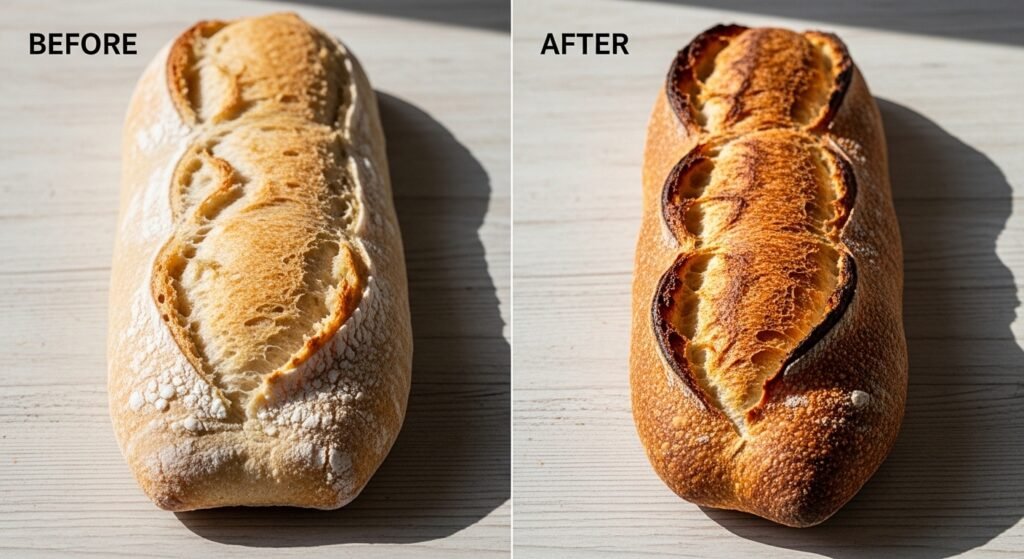
One big mistake is using a starter that is not active. If it has not doubled, your bread will not rise well. Always check for bubbles and a pleasant smell.
Another thing is rushing the proofing. If you bake too early, the baguettes stay flat. If you wait too long, they can spread out and lose shape. Touch the dough gently. It should feel airy but still have a little spring.
Also, too much flour on the outside during shaping can stop the crust from forming nicely. Use just enough to keep it from sticking.
Some people forget the steam. Without steam in the first part of baking, the crust gets thick and tough instead of thin and crispy like a true artisan sourdough baguette recipe.
Variations to Try After Your First Success
Once you master the basic easy sourdough baguette recipe, you can play with small changes. Add a handful of seeds on top before baking for extra crunch. Or mix in a little olive oil for a softer crumb.
For a whole wheat sourdough baguette recipe, replace up to one quarter of the white flour with whole wheat. The dough may need a bit more water because whole wheat soaks it up. The flavor becomes richer and more earthy.
Mini sourdough baguette recipe is perfect for parties. Make smaller rolls and bake them a few minutes less. They look cute and are easy to share.
If you want to explore gluten free sourdough baguette recipe, you will need special gluten-free flours and often a binder like psyllium. The dough behaves differently and needs more careful handling, but many bakers enjoy the challenge and create tasty results.
FAQ About Sourdough Baguette Recipe
How long does the whole process take?
From mixing to eating, you can finish in about six to eight hours on the same day. This makes it a great same day sourdough baguette recipe for busy schedules.
Can I use discard instead of active starter?
It is better to use active bubbly starter for good rise. Discard works in some recipes with added yeast, but for pure sourdough, active is best.
Why did my baguettes not get a crispy crust?
Most often, there was not enough steam or the oven was not hot enough at the start. Try preheating longer next time.
Is this recipe like the king arthur sourdough baguette recipe?
It is similar in spirit but simpler for home bakers. King Arthur versions sometimes use more starter or extra ingredients, while this one keeps it straightforward.
Can I make it softer inside?
Yes. Use a little less water or bake at a slightly lower temperature for the last part of baking. This creates a softer sourdough baguette recipe texture.
What if my dough does not rise much?
Check your starter and the room temperature. Cold kitchens slow everything down. Give it more time or move the bowl to a warmer spot.
How do I store the bread?
Keep it in a paper bag or bread box for one day. After that, slice and freeze what you do not eat. Toast the frozen slices straight from the freezer.
Final Thoughts on Making Your Own Artisan Sourdough Baguette Recipe

Making bread at home connects you to simple joys. You mix a few basic things, give them time and care, and end up with golden loaves that fill your home with warmth. This best sourdough baguette recipe shows that you do not need to be an expert. With practice and patience, your results will improve each time.
The gentle tangy taste, the crackly crust, and the soft inside make every meal feel special. Whether you share with family, serve with soup, or enjoy with butter and jam, these baguettes bring happiness. Start small, learn as you go, and soon you will have your own favorite way to bake.
Baking bread is a kind reminder that good things come to those who wait a little and enjoy the process. Your kitchen can become a small bakery where wonderful smells and fresh bread happen again and again.
Disclaimer:
This article provides general information and a home baking recipe based on common practices. Results may vary depending on ingredients, equipment, kitchen conditions, and technique. Baking involves heat and handling dough—please use caution to avoid burns or other accidents. Always follow safe food handling guidelines. This is not professional baking advice, and the author is not responsible for any outcomes or issues from following these steps. For health concerns, consult a doctor or nutritionist. The content is for entertainment and educational purposes only and does not guarantee specific results.
Leave a Reply