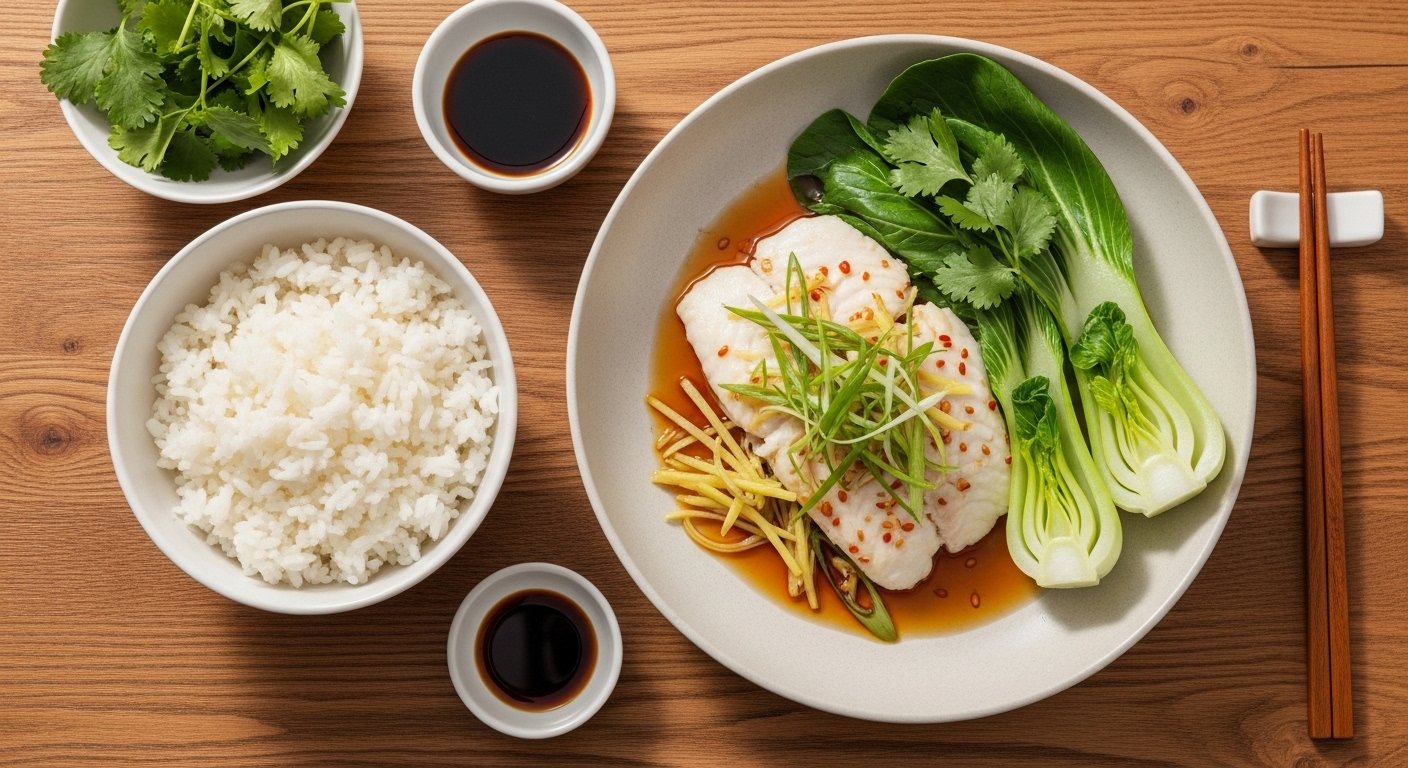
Many people around the world love to eat fish with rice. This combination feels comforting and filling. Asian fish recipes bring special tastes that make simple meals exciting. You can find fresh flavors from soy sauce, ginger, garlic, and light spices in these dishes. That is why Asian fish recipes with rice are perfect for busy families, beginners in cooking, and anyone who wants healthy food without too much work.
Fish gives your body good protein and healthy fats. Rice adds energy that keeps you going through the day. Together, they create balanced plates that taste great and feel light. In many Asian homes, families enjoy these meals every week because they are quick to prepare and full of natural goodness. Over time, people have shared easy ways to cook them at home. This article will guide you through some of the best Asian fish recipes to eat with rice. You will learn simple steps, helpful tips, and ways to avoid common mistakes. Let’s explore these flavorful ideas together.
Why Asian Fish Recipes Pair So Well with Rice
Fish and rice work together like good friends. The soft rice soaks up tasty sauces from the fish. This means every bite feels juicy and flavorful. For example, when you cook fish with ginger and soy, the rice catches the light salty and sweet notes. It makes the meal more enjoyable.
Another thing is that rice is gentle on the stomach. Fish adds important nutrients without making the dish heavy. Many Asian cultures have enjoyed this pair for hundreds of years because it supports daily energy and health. In addition, these recipes often use fresh ingredients like green onions, bok choy, or cabbage. The vegetables bring color and crunch that balance the soft rice and tender fish.
That’s why beginners find Asian fish recipes easy to love. You do not need fancy tools or long hours in the kitchen. Most dishes come together in thirty to forty-five minutes. This makes them great for weeknight dinners when time is short.
Simple Steamed Fish with Ginger and Soy Sauce
One of the easiest Asian fish recipes is steamed fish with ginger and soy. People in many parts of Asia cook this way because it keeps the fish soft and fresh. You start by choosing a mild white fish like cod or tilapia. These types cook gently and do not fall apart.
First, place the fish on a plate. Add thin slices of fresh ginger on top. Ginger helps remove any strong smells and adds a warm taste. Next, pour a little soy sauce and a drop of sesame oil around the fish. After that, steam it over boiling water for about ten to fifteen minutes. The fish turns white and flaky when it is ready.
While the fish steams, cook your rice. Plain white rice or jasmine rice works best because it has a light scent that matches the fish. Once everything is done, spoon the rice into bowls. Place pieces of fish on top and pour the warm sauce over it. Add chopped green onions for a fresh touch. This dish feels light yet satisfying. Families often serve it with a side of stir-fried greens. The whole meal comes together smoothly and leaves everyone feeling good.
Baked Fish with Asian Flavors and Rice in One Pan
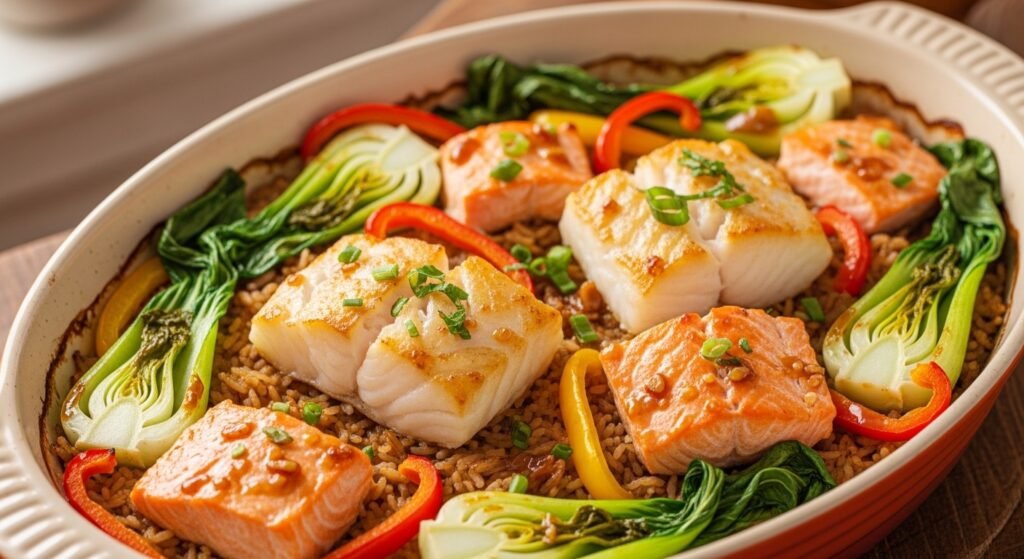
Baking is another simple method for Asian fish recipes with rice. It saves time because you can cook the fish and rice together. Try this with thick pieces of cod or salmon. Salmon brings a richer taste while cod stays mild.
Begin by mixing a quick sauce with soy sauce, a bit of honey or sugar, garlic, and lemon juice. This sauce gives sweet and savory notes that taste wonderful. Spread some rice in a baking dish and add water or broth. Place the fish pieces on top of the rice. Brush the sauce over the fish. In addition, add chopped vegetables like bok choy or bell peppers around the sides.
Cover the dish and bake in a medium oven for about thirty to thirty-five minutes. The rice absorbs the flavors from the fish and sauce as it cooks. This means you get tender fish and tasty rice without extra pans to wash. After baking, let it rest for a few minutes. The steam finishes the cooking gently.
This one-pan method is perfect for busy days. It also works well for families because everyone can take what they like. Over time, you can change the vegetables based on what is fresh at the market. That keeps the meals interesting without extra effort.
Fried Fish Rice Bowls with Light Spices
Sometimes you want a bit of crunch in your Asian fish recipes. Fried fish rice bowls deliver that texture while staying easy. Use firm fish like basa or salmon cut into bite-size pieces. Coat the pieces lightly with a mix of cornstarch, salt, and pepper. This coating helps the fish turn golden without soaking up too much oil.
Heat a pan with a small amount of oil. Cook the fish pieces until they are crispy on the outside and cooked inside. This takes only a few minutes on each side. Remove the fish and set it aside.
In the same pan, quickly stir-fry garlic, ginger, and some vegetables such as carrots or beans. Add cooked rice next. A little soy sauce and a touch of chili brings gentle heat and flavor. Mix everything well so the rice gets coated nicely. After that, place the crispy fish on top of the rice in bowls.
These bowls look colorful and taste fresh. Many people enjoy adding a simple sauce like a mix of mayonnaise and a bit of hot sauce on the side. The contrast between crunchy fish and soft rice makes each bite exciting. This recipe is great when you have leftover rice from the day before. It turns simple ingredients into a restaurant-style meal at home.
One-Pot Fish and Rice with Coconut or Mild Spices
One-pot meals save cleaning time and build deep flavors. Asian fish recipes cooked in one pot often use coconut milk or light broth. Coconut rice with steamed fish is a favorite in some regions because the creamy rice pairs nicely with tender fish.
Start by cooking rice in a wide pan with a mix of water and coconut milk. The coconut gives a soft sweetness that feels comforting. While the rice simmers, prepare thin fish fillets. Season them simply with salt and pepper. Place the fish and some quick-cooking vegetables like spinach or thin cabbage on top of the rice near the end of cooking.
Cover the pan and let the steam finish the fish in five to ten minutes. The fish stays moist because it cooks gently above the rice. This method works well with basa or other white fish that cook fast. In addition, you can add fresh herbs like cilantro at the end for a bright taste.
The beauty of one-pot Asian fish recipes is how everything blends together naturally. The rice takes on hints of the fish juices while the fish stays delicate. Families love this because it feels like a complete meal in one dish. It is also forgiving if you are learning to cook.
Tips for Choosing Fresh Fish and Cooking It Right
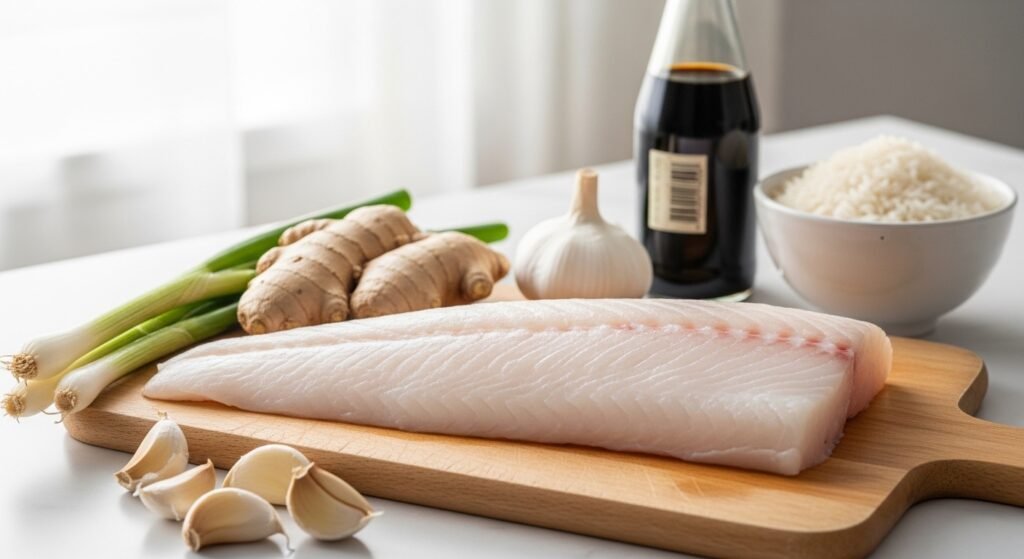
Good Asian fish recipes start with fresh fish. Look for fish that smells like the ocean, not strong or fishy. The flesh should feel firm when you press it gently. Clear eyes and bright skin are other signs of freshness for whole fish. For fillets, choose ones with even color and no dark spots.
Always pat the fish dry with a paper towel before cooking. Wet fish steams instead of searing or baking nicely. That is why drying it helps create better texture. Season the fish just before cooking because salt can pull out moisture if left too long.
Another helpful tip is not to overcook the fish. Fish cooks quickly, so check it often. It is done when it flakes easily with a fork but still feels moist inside. Over time, you will learn the exact time for your stove or oven. Start with lower heat and adjust as needed. These small steps make a big difference in how your meals turn out.
For rice, rinse it until the water runs mostly clear. This removes extra starch so the grains stay separate and fluffy. Use the right amount of water for the type of rice you choose. Jasmine or basmati rice pairs especially well with Asian flavors because of their light scent.
Common Mistakes to Avoid in Asian Fish Recipes
Many beginners make small mistakes that change the final taste. One common error is using too much sauce at the beginning. Start with a light hand because you can always add more later. Too much soy or salt can hide the natural sweetness of the fish.
Another mistake is moving the fish too often in the pan. Fish is delicate, so let it cook undisturbed until it releases naturally. This helps it develop nice color and prevents breaking apart. In fried recipes, make sure the oil is hot enough before adding the fish. If the oil is cool, the fish absorbs more oil and becomes greasy.
For baked or steamed dishes, avoid opening the oven or steamer too many times. Each time you open it, steam escapes and cooking time changes. Also, do not overcrowd the pan. Give the fish and rice space so heat can reach everything evenly. These simple fixes help your Asian fish recipes turn out better every time.
Health Benefits of Enjoying Fish with Rice
Eating fish with rice brings many good things for your body. Fish is rich in protein that helps build strong muscles. It also contains omega-3 fats that support heart health and clear thinking. Rice gives steady energy without feeling heavy.
Together, they make a balanced plate that includes carbohydrates, protein, and often vegetables. This balance helps you feel full longer and supports daily activities. Many people notice better energy when they include these meals regularly. In addition, the light spices and herbs in Asian styles add natural antioxidants that are kind to the body.
These recipes can fit into different eating plans because you control the ingredients. Use less oil for lighter versions or add more greens for extra vitamins. Over time, enjoying Asian fish recipes with rice can become a healthy habit that the whole family looks forward to.
FAQ About Asian Fish Recipes with Rice
What is the easiest Asian fish recipe for beginners?
Steamed fish with ginger and soy sauce is one of the simplest. It needs few ingredients and gentle cooking that is hard to mess up.
Can I use frozen fish for these recipes?
Yes, frozen fish works well if you thaw it completely in the fridge first. Pat it dry before cooking to remove extra water.
Which rice tastes best with Asian fish dishes?
Jasmine rice or long-grain white rice pairs nicely because it stays fluffy and absorbs sauces without becoming mushy.
How do I make the fish less fishy in taste?
Fresh ginger, green onions, or a splash of lemon or vinegar help reduce strong smells. Cooking methods like steaming or baking also keep flavors mild.
Are these recipes good for meal prep? Many Asian fish recipes store well for a day or two in the fridge. Keep rice and fish separate and reheat gently to keep the texture nice.
What vegetables go well with fish and rice?
Bok choy, cabbage, carrots, spinach, and green beans are popular choices. They cook quickly and add color and crunch.
Can I make these recipes less spicy for kids?
Yes, simply leave out chili or hot sauce. The base flavors from ginger, garlic, and soy still taste delicious without heat.
Wrapping Up Your Asian Fish Cooking Journey
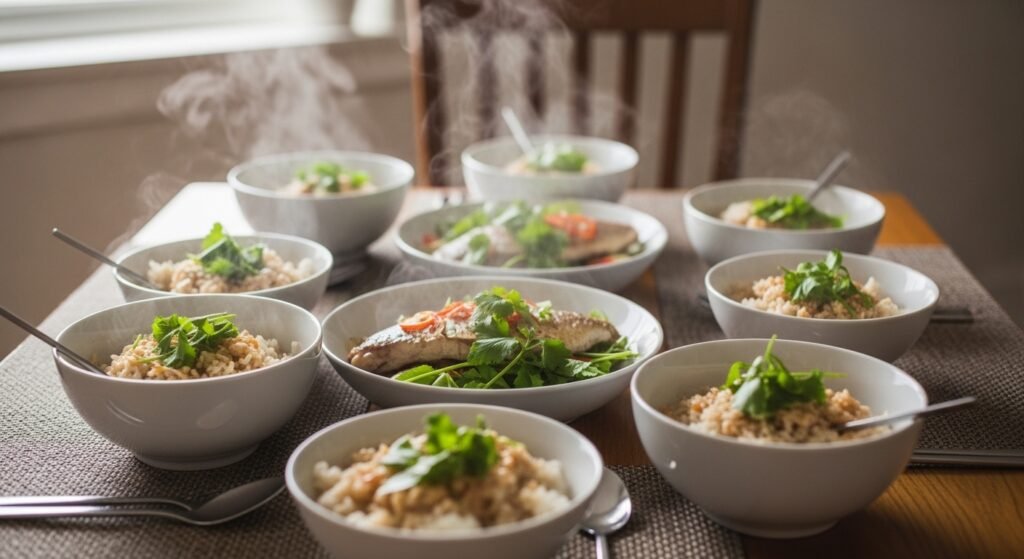
Asian fish recipes with rice offer endless ways to enjoy tasty and healthy meals. From gentle steamed dishes to crispy fried bowls and easy one-pan bakes, each method brings its own charm. The key is starting with fresh ingredients, following simple steps, and learning from small adjustments along the way.
These meals bring families together around the table with comforting flavors and good nutrition. They prove that good food does not need to be complicated. As you try these ideas, you will discover your own favorite twists using what you have at home.
Cooking should feel relaxing and rewarding. With a little practice, your Asian fish recipes will become go-to favorites that everyone asks for again and again. Enjoy the process, share the meals, and savor the wonderful tastes that fish and rice create together.
Disclaimer:
This article provides general information and simple cooking ideas based on common traditional methods. Recipes and tips are for educational purposes only. Always use fresh ingredients, follow food safety guidelines, and consult a doctor or nutritionist for personalized dietary advice. Results may vary depending on ingredients, equipment, and individual cooking skills. The author is not responsible for any outcomes from following these suggestions.
Leave a Reply